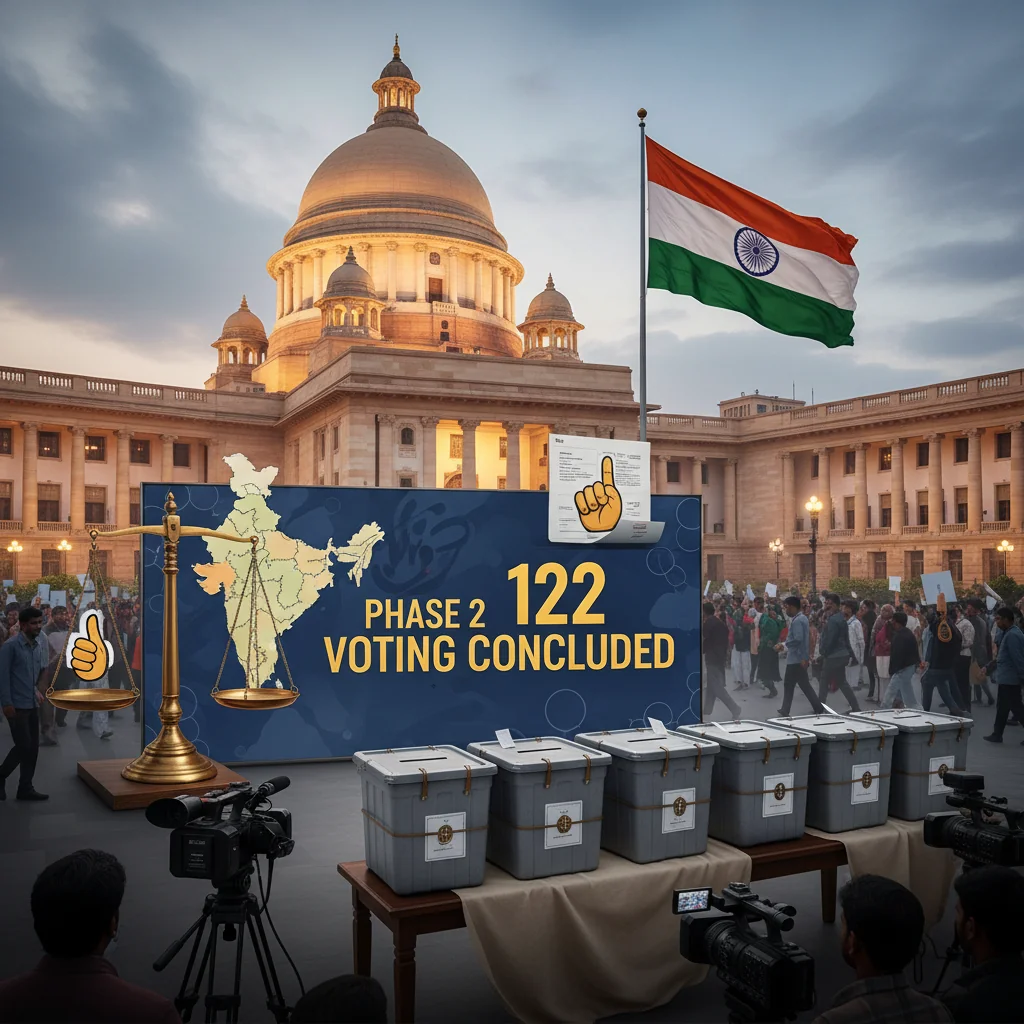
Bihar Assembly Elections 2025: Second Phase Voting Concludes Amid High Turnout and Controversies
On November 11, 2025, the second phase of the Bihar Legislative Assembly elections concluded, covering 122 constituencies across the state. This phase witnessed a significant voter turnout, reflecting the electorate’s keen interest in shaping the state’s political future. The first phase, held on November 6, had already set a record with a 65.08% turnout, the highest in Bihar’s electoral history.
Key Political Contenders and Alliances
The elections are primarily contested between the National Democratic Alliance (NDA) and the Mahagathbandhan (Grand Alliance). The NDA comprises the Bharatiya Janata Party (BJP), Janata Dal (United) [JD(U)], Lok Janshakti Party (Ram Vilas) [LJP(RV)], Hindustani Awam Morcha (HAM), and Rashtriya Lok Samata Party (RLSP). The Mahagathbandhan includes the Rashtriya Janata Dal (RJD), Indian National Congress (INC), and Communist Party of India (Marxist–Leninist) Liberation [CPI(ML)L]. A notable entrant is the Jan Suraaj Party, founded by political strategist Prashant Kishor, which has fielded candidates in several constituencies.
Election Schedule and Voter Turnout
The Election Commission of India announced the schedule on October 6, 2025. The first phase on November 6 covered 121 seats, while the second phase on November 11 encompassed 122 seats. The counting of votes is scheduled for November 14, 2025. The first phase recorded a historic turnout of 65.08%, indicating a robust democratic engagement among Bihar’s electorate.
Controversies and Security Concerns
The electoral process has not been without challenges. On November 8, an assistant returning officer in Samastipur district was suspended after a large number of Voter Verifiable Paper Audit Trail (VVPAT) slips were found discarded near a college in the Sarairanjan assembly segment. The Election Commission initiated an investigation, emphasizing that the slips were from a mock poll and did not compromise the integrity of the actual voting process.
Additionally, the election period has seen incidents of violence. A supporter of the Jan Suraaj Party was reportedly shot dead in a politically motivated attack, raising concerns about the safety of party workers and the overall security environment during the elections.
Implications for State and National Politics
The outcome of the Bihar elections holds significant implications for both state and national politics. Bihar, with its 243 assembly seats, is a crucial state that sends 40 members to the Lok Sabha, India’s lower house of Parliament. A victory for the NDA would reinforce Prime Minister Narendra Modi’s influence and the alliance’s governance model. Conversely, a win for the Mahagathbandhan could signal a shift in voter sentiment and potentially reshape political alliances ahead of the 2029 general elections.
As the state awaits the results on November 14, political analysts and citizens alike are keenly observing the developments, anticipating the potential impact on Bihar’s future trajectory.