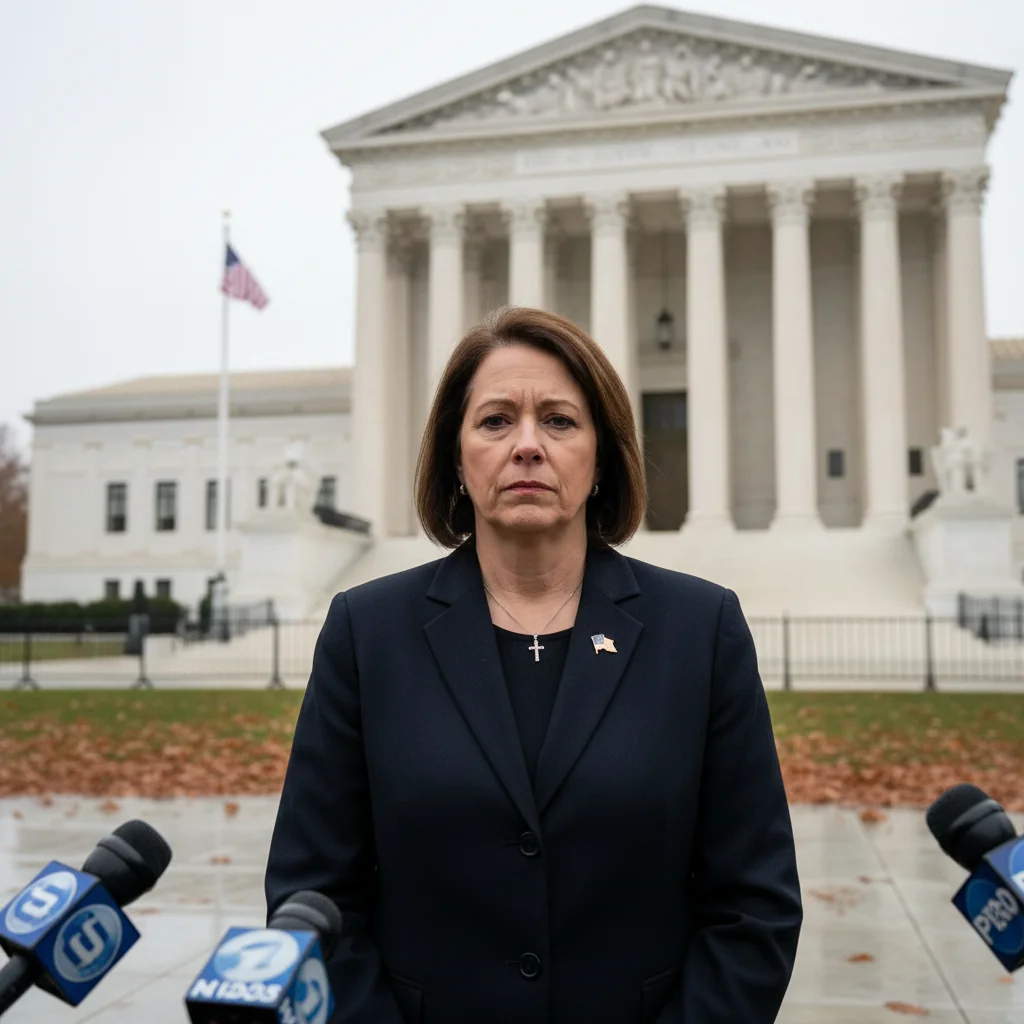
Supreme Court Declines to Hear Kim Davis’s Appeal, Upholding Same-Sex Marriage Rights
On November 10, 2025, the United States Supreme Court declined to hear an appeal from Kim Davis, the former county clerk of Rowan County, Kentucky, who had refused to issue marriage licenses to same-sex couples following the Court’s 2015 decision inObergefell v. Hodges. This refusal effectively upholds the lower court’s ruling that Davis must pay $360,000 in damages and attorney’s fees to the couple she denied a license.
Background of the Case
Kim Davis gained national attention in 2015 when she defied the Supreme Court’s ruling inObergefell v. Hodges, which legalized same-sex marriage nationwide. Citing her Apostolic Christian beliefs, Davis refused to issue marriage licenses to same-sex couples, leading to legal battles and her brief incarceration for contempt of court. In 2018, she lost her bid for re-election as county clerk.
Legal Proceedings and Supreme Court’s Decision
After being sued by David Ermold and David Moore, a same-sex couple she denied a marriage license, Davis was ordered by lower courts to pay $360,000 in damages and attorney’s fees. She appealed this decision, arguing that her First Amendment rights protected her actions. However, the 6th U.S. Circuit Court of Appeals rejected her claims, stating that government officials performing their duties cannot claim First Amendment protections for actions considered state conduct.
Seeking to overturn the 2015Obergefelldecision, Davis’s legal team filed a petition for a writ of certiorari with the Supreme Court in July 2025. The Court, without comment, declined to hear the case, thereby leaving the lower court’s ruling intact and reaffirming the legality of same-sex marriage in the United States.
Implications and Reactions
The Supreme Court’s refusal to hear Davis’s appeal underscores the continued legal standing of same-sex marriage and affirms that personal religious beliefs cannot override the civil rights of others in public office. LGBTQ advocacy groups have praised the Court’s decision, viewing it as a reinforcement of marriage equality and a deterrent against future attempts to undermine it.
Despite the Court’s conservative majority, including Justices Clarence Thomas and Samuel Alito, who dissented in the originalObergefellruling, the decision not to revisit the case indicates a reluctance to overturn established precedents regarding same-sex marriage. Justice Amy Coney Barrett, who joined the Court after the 2015 decision, has indicated support for precedents when people have relied on them to build their lives, suggesting that same-sex marriage may not be overturned.
Kim Davis’s legal team has expressed disappointment but remains steadfast in their belief that theObergefelldecision was “egregiously wrong” and continues to advocate for its reversal. However, with the Supreme Court’s latest action, the path to challenging same-sex marriage rights appears increasingly narrow.