
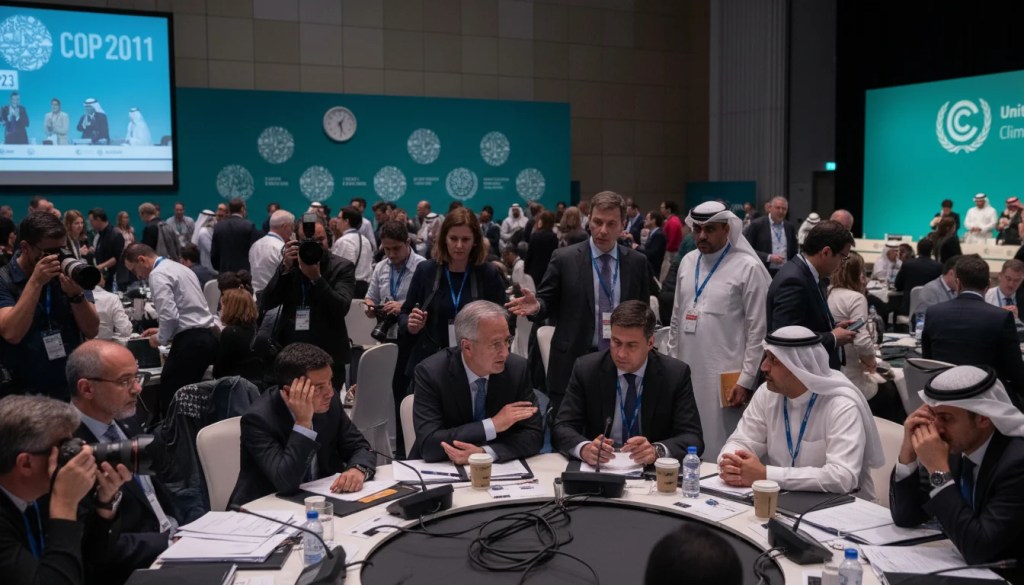
UN Climate Talks Extend Beyond Deadline Amid Fossil Fuel Disputes
The 2025 United Nations Climate Change Conference (COP30) in Belém, Brazil, has surpassed its scheduled conclusion as nations remain divided over the inclusion of fossil fuel phaseout language in the final agreement. The conference, originally set to end on November 21, 2025, continues into overtime with negotiators striving to reconcile differences.
Contentious Draft Agreement
A draft proposal released on November 21 omitted explicit references to phasing out fossil fuels, sparking criticism from over 80 countries advocating for stronger commitments. The European Union and Pacific island nations have expressed dissatisfaction, emphasizing the need for a clear roadmap to transition away from oil, gas, and coal. Conversely, major oil-producing countries, including Saudi Arabia and the United Arab Emirates, oppose such language, citing potential economic repercussions.
Disruptions and Delays
On November 20, a fire at the conference venue led to evacuations and a nearly day-long delay in negotiations. Thirteen individuals were treated for smoke inhalation. The incident occurred during critical discussions on climate finance, fossil fuel reductions, and transparency in climate reporting. UN Secretary-General António Guterres urged nations to compromise and accelerate efforts to finalize an agreement.
Calls for Unity and Action
Brazil, as the host nation, has called for unity to overcome the deadlock. COP30 President André Corrêa do Lago emphasized the importance of reaching a consensus that addresses the concerns of all parties. Developing countries are pressing for increased climate finance from wealthier nations to support their transition to clean energy and adaptation to climate impacts. The conference’s extension reflects the complexities of balancing economic interests with the urgent need for climate action.


