Interstellar Comet 3I/ATLAS Becomes Visible in India’s Skies
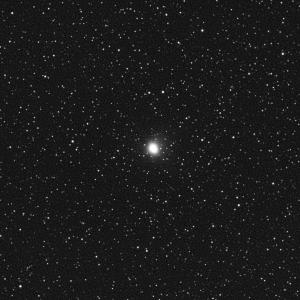
The interstellar comet 3I/ATLAS, the third known object of its kind to traverse our solar system, has reemerged from behind the Sun and is now observable from Earth. On October 31, 2025, astronomer Qicheng Zhang captured the first optical image of the comet post-perihelion using the Lowell Observatory’s Discovery Telescope in Arizona. The comet had reached its closest approach to the Sun on October 29, at a distance of approximately 210 million kilometers.
Visibility in India
As 3I/ATLAS moves away from the Sun, it is becoming increasingly visible in the Northern Hemisphere, including India. Astronomers note that standard amateur telescopes can now detect the comet, especially during morning twilight when it rises above the northeastern horizon. Enthusiasts are encouraged to observe the comet in the early hours before sunrise for optimal viewing conditions.
Comet’s Characteristics and Observations
Traveling at over 210,000 kilometers per hour, 3I/ATLAS has exhibited intriguing behavior. Prior to its perihelion, the comet brightened unexpectedly and displayed a bluish hue, likely due to gas emissions such as carbon monoxide or ammonia. These observations suggest that as the comet heats up, sublimation of volatile compounds occurs, providing valuable insights into its composition.
Upcoming Events and Scientific Significance
The comet is projected to make its closest approach to Earth on December 19, 2025, at a distance of approximately 269 million kilometers. This event offers a rare opportunity for scientists to study an object originating from beyond our solar system. Observations of 3I/ATLAS may enhance our understanding of interstellar chemistry and the formation of planetary systems.
Indian astronomers and space enthusiasts are particularly excited about this event, as it provides a unique chance to observe and study an interstellar visitor from within our own skies. The Indian Space Research Organisation (ISRO) has expressed interest in collaborating with international agencies to analyze data collected during the comet’s passage.
As 3I/ATLAS continues its journey through our solar system, both professional and amateur astronomers in India are encouraged to seize this opportunity to witness and study this rare celestial phenomenon.