
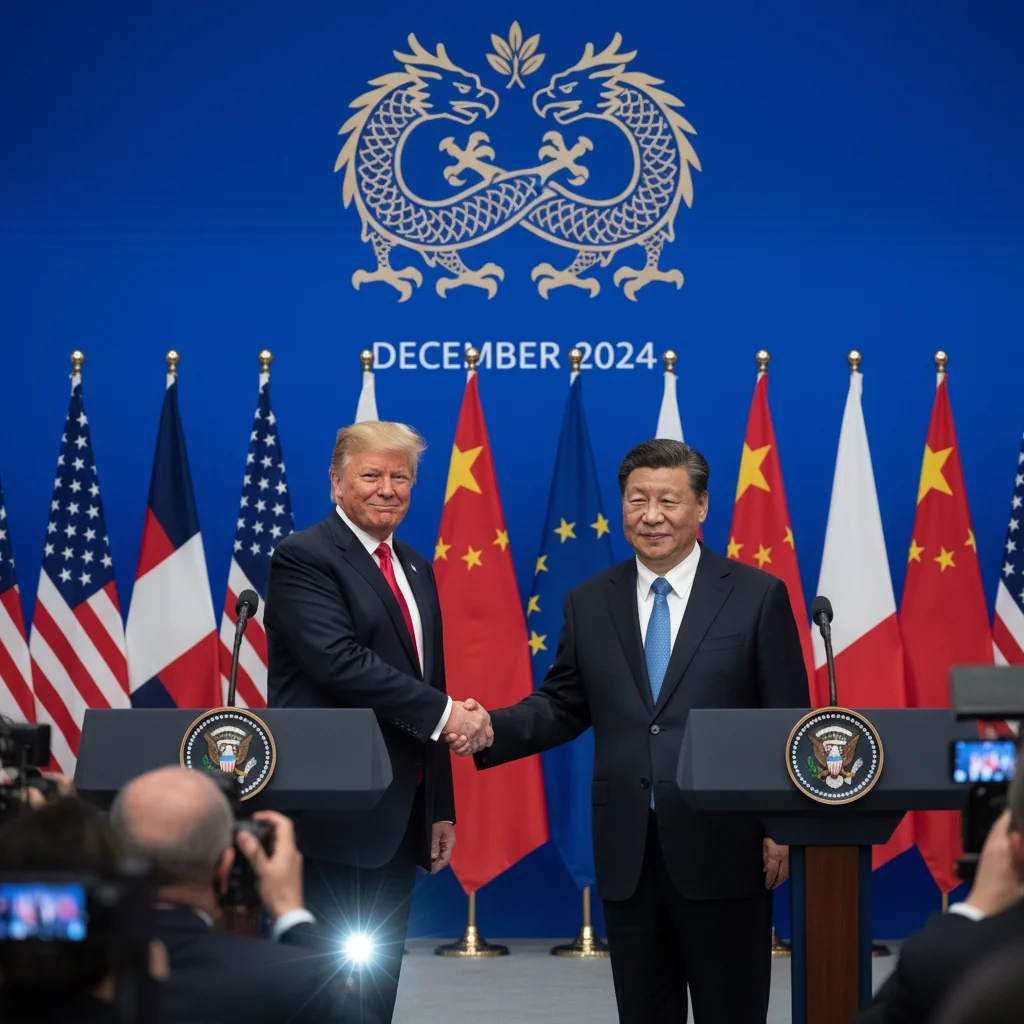
Trump and Xi Reach Trade Agreement, Easing US-China Tensions
On October 30, 2025, U.S. President Donald Trump and Chinese President Xi Jinping met in Busan, South Korea, culminating in a significant trade agreement aimed at de-escalating the ongoing tensions between the two economic powerhouses. The accord includes a reduction of U.S. tariffs on Chinese imports and commitments from China to address key U.S. concerns.
Key Components of the Agreement
As part of the deal, the United States agreed to lower tariffs on Chinese goods from 57% to 47%. Specifically, tariffs related to fentanyl were reduced from 20% to 10%, contingent upon China’s pledge to intensify efforts to curb the trafficking of the opioid into the U.S. In return, China committed to maintaining its rare earth exports for at least one year, ensuring a steady supply of these critical materials essential for various industries. Additionally, China agreed to resume large-scale purchases of American soybeans, with plans to buy 25 million metric tons annually over the next three years.
Leaders’ Reactions and Future Plans
President Trump described the meeting as a “12 out of 10,” expressing optimism about the future of U.S.-China relations. He announced plans to visit China in April to further solidify the partnership. President Xi echoed this sentiment, emphasizing the importance of cooperation between the two nations. Both leaders acknowledged that while this agreement marks a positive step, several contentious issues, such as Taiwan and advanced technology restrictions, remain unresolved.
Market and Analyst Responses
The announcement had a muted impact on financial markets, with little rally observed in U.S. soybean futures or Chinese stock indices. Analysts caution that while the agreement provides temporary relief, many core issues persist, and the truce may be fragile. The commitment to maintain rare earth exports is seen as a significant move to stabilize global supply chains, particularly in sectors like automotive and defense. However, the long-term effectiveness of the deal will depend on both nations’ adherence to their commitments and the resolution of underlying disputes.


